Seven Explanations On Why Best Espresso Maker Is Important


Best Espresso Maker - The Breville Bambino Plus
This prosumer model, a scaled-down version of one of the most sought-after commercial equipment, was a top pick in our tests. Its pressure gauge gives you an accurate gauge of the strength of your drink and the steam wand quickly heats up.
It's also a great choice for coffee lovers who enjoy the art of making a cup of espresso. The manual controls allow you to grind, tamp and time your shots.
Features
The top espresso maker will give you the power to create rich and flavorful drinks with minimal effort. A high-quality machine will come with steam wands that can generate silky milk froth that rivals the one created by your favorite barista. It should also be able to make multiple shots of espresso at a time. It should have an PID controller that precisely regulates and stabilizes boiler and thermoblock temperatures. This feature will ensure the consistency of your brewing process, particularly if your coffee has been grind too coarsely or over or under-extracted.
A top espresso maker must have a portafilter with a removable basket, which will make it easier to clean the machine. It should also be able to use pre-ground beans to cut down on time and cost. It should also have a pre-infusion setting that lets you control the amount of water that is being pushed through your grounds during extraction.
The Philips EC702 features an easy-to-use interface that includes five drink presets (espresso cappuccino, cappuccino, macchiato latte, black coffee). Our reviewers found the drinks to be tasty and satisfying. It has a PID which lets you set and control the water temperature as well as the solid steam wand and a thermoblock that heats up faster than other machines. It also comes with a water-hardness test strip that helps you adjust the system to your local water's level.
This is a true prosumer machine, which means that it was created for those who don't need to shell out thousands of dollars, but need a high-end espresso. It has a large clear display and an intuitive interface that makes it easy to use. It has a built-in grinder that grinds whole beans for your favorite recipe. It can brew a full cup at once, and comes with an insulated thermoblock that heats quickly. It has a portafilter equipped with double walls that produce a thick crema for your espresso shot.
While there is a learning curve for this machine However, the Rocket Appartamento is easy to operate and has the quality components you would expect from a professional espresso maker. Its user manual is clear and complete, and includes instructions for tamping, dosing, and steaming. The Rocket also has a smart espresso brewing feature that will tell you if your grounds aren't coarse enough or if you're extruding too much from your shots. It also comes with a professional-looking milk frother, which is more efficient and more hygienic than the ones found on other espresso makers for home use.
Functions
The top espresso maker comes with all the features you need for mouthwatering coffee. This includes grinders that make consistently fine and consistent grounds, a PID controller (that is like something straight out of a college math course) which ensures that the temperature of your water is accurate, a portafilter with a tamper for compacting the ground beans, and a steam wand to make frothy milk to serve with lattes or cappuccinos. Each of these elements can be changed depending on your preferences and blend. This is why a hybrid machine will be more appealing than an automated super-machine.
Design
A good espresso maker will have some kind of PID controller (proportional-integral-derivative, if you want to sound smart). This is the microprocessor-controlled brain that regulates and stabilizes boiler or thermoblock temperature much more precisely than a simpler electromechanical thermostat (aka pressurestat). This is crucial because higher temperatures can cause excessive extraction of bitter flavors from an espresso shot.
Super-automatic machines, such as the Jura line can do everything for you. They measure and grind the coffee beans, extract the shot, and froth milk. But they're not as precise as semi-automatic or manual machines, and they often produce coffee that lacks the rich crema (the creamy foam on top of an espresso) and taste that many people crave.
sites is why we've included a number of high-quality manual or semi-automatic espresso makers in our evaluation. They're not expensive, but they give you more control over the brewing process and produce a superior cup of espresso. The Ninja XS is a great example of this: It features an attractive, user-friendly digital interface and a built-in grinder that does its job well enough to make an excellent espresso with an affordable machine. It also produced a higher-than-average drips and a smooth "cold brew" in just five minutes.
We've tried a variety of models to determine the most suitable for home use. Our top picks include the semi-automatics of Breville and the Gaggia Classic Pro. Two coffee professionals who test these models were awed by their ease of use as well as their durability and capacity of producing high-quality shots. These models are easy to use if you know how grind your beans and how grind them yourself.
Prosumer machines are also growing in popularity. They are smaller versions of the most popular commercial espresso machines. One of those machines, the Rocket Appartamento, is a stunning piece of art that takes some getting used to and requires a lot of accuracy in grinding and tamping. But it can produce truly exceptional espresso and is perfect for anyone who views coffee making as a serious pastime and not just a morning routine.
Cost
The top espresso makers can be expensive but they don't need to be. You can buy a machine for less than $500 that makes delicious coffee and steams milk. The Breville Bambino Plus is a great choice for people who are new to making espresso or who don't want a complex machine. It is small and requires very little counter space. It comes with a tamper, the spout, double-wall filters, as well as an milk jug that can be used to make cappuccinos and lattes in the cafe style.
When you are looking to purchase an espresso machine, there are several factors to take into account. This includes the cost and features. The majority of people who purchase these machines are devoted to their coffee and are seeking a way to create quality drinks at home that are cafe-quality. There are many elements that make the perfect espresso and even a costly professional-grade machine can fail if you don't use the proper beans or grind them correctly.
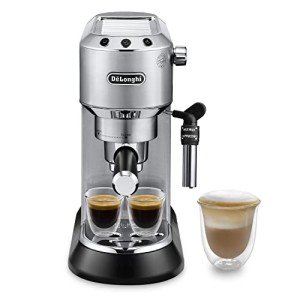
A professional-grade espresso machine isn't for everyone, but if have the money and are committed to your coffee, you can't be wrong with the Rocket Appartamento. This "prosumer" machine uses commercial-grade components and delivers the most consistent shots of all the machines we tested, though it does have a learning curve. It takes longer to heat than other high-end machines, but it has a thermoblock that ensures water is at the perfect temperature for steaming or brewing.
The pump is a key component of an espresso machine along with the heating system. The majority of espresso machines used by consumers have a motor that vibrates, however, more expensive machines (so called prosumer machines) and commercial machines have rotary pumps which are quieter and larger. The Vibe Pump from Nespresso is one of the most efficient and reliable available, and it can produce an excellent shot with minimal amount of noise.
Gaggia Classic Pro is another well-known espresso maker that is ideal for beginners. It costs about $200. This upgraded version of a classic model comes with some improvements over its predecessor. For instance, it has an improved steam wand, but it is still struggling to produce a velvety milk. However, it's not as easy for beginners to use as the Breville Bambino Plus and requires lots of manual manipulation.